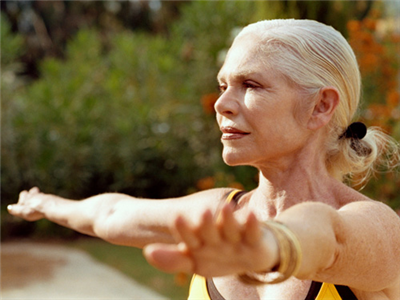
Showing posts with label Hair. Show all posts

Thursday, May 3, 2012

Reducing the Signs of Aging with Estrogen

By: Marina Johnson, M.D., F.A.C.E

As women age, they start noticing the telltale signs: fine wrinkles and dry, sagging skin.

Risks of Not Having Enough Estrogen

Women are denied estrogen because of an increased risk of breast cancer. Yet, they’re not informed there are more risks from NOT taking estrogen! Heart disease and strokes kill more women each year (400,000) than the next sixteen causes of death including diabetes, all forms of cancer, aids and accidents!

Estrogen decreases Alzheimer’s and dementia by 50% and osteoporosis by 40%. I wrote my book, “Outliving Your Ovaries: An Endocrinologist Reviews the Risks and Rewards of Treating Menopause with Hormone Replacement Therapy,” to give women a guidebook for evaluating and selecting the safest forms of estrogen. Estrogen has over 400 actions on tissues throughout the body and when it’s deficient, adverse consequences occur. While hot flashes can be bothersome, the most serious problems occur when vital tissues literally start falling apart!


Changes in Skin

Let’s start with the most obvious changes: skin, hair and weight gain! I can look at a menopausal woman in her 50s or 60s and tell you if she’s taking estrogen. Many menopausal women resort to cosmetic surgery, Botox and fillers to look younger. It makes more sense to first restore normal estrogen balance. By increasing collagen, estrogen enhances the results of any procedures you choose to do. Healthy skin is also supported by having regular monthly facials, avoiding excessive sun & tanning booths and taking at least 1000 iu of Vitamin D3. Higher doses should be monitored by your physician.


Changes in Hair

Without estrogen, women develop thinning hair even in women who used to have a lot of hair. In menopause, a woman’s ovaries often continue to product testosterone. Even small amounts of testosterone without estrogen leads to loss of scalp hair and growth of facial hair. That’s why you often see older women with whiskers!

Estrogen Delays Middle Age

Estrogen delays the middle age spread by combating insulin resistance. Avoid ORAL estrogen that can worsen weight gain in many women! Instead, choose natural, bioidentical pharmaceutical topical estrogen that can be found in any drug store in the form of patches, gels, creams or mists. Compounded bioidentical hormones do NOT meet the same strict manufacturing standards for quality control and effectiveness.

Within Six Months of Losing Estrogen

Within six months of losing estrogen, many women notice vaginal dryness and painful sex leading to a decreased sex drive. No matter how much you love your partner, when your brain receives pain signals with sex, it turns off libido! Incontinence of urine, urgency and frequent bladder infections occur more often in postmenopausal women who don’t take estrogen.

That’s why it’s common to see older women on no HRT who have to use Depends! The good news is that both problems often resolve with a course of vaginal estrogen. Don’t cheat yourself by waiting too long. The most protection comes from starting estrogen within 10 years of menopause.


Read more: http://www.beliefnet.com/Health/Physical-Health/Reducing-the-Signs-of-Aging-with-Estrogen.aspx?p=6#ixzz1tlCt5Vcx


Marina Johnson, M.D., F.A.C.E., a UCLA-USC trained physician has no ties to any pharmaceutical company. She is the author of “Outliving Your Ovaries: An Endocrinologist Reviews the Risks and Rewards of Treating Menopause With Hormone Replacement Therapy.” She’s the medical director of the Institute of Endocrinology and Preventive Medicine in Dallas, Texas. In 2011, she spoke at the Cleveland HeartLab symposium at the Cleveland Clinic. She’s appeared on Joni’s Table Talk on Daystar Television Network, The Balancing Act on Lifetime Television, Daybreak USA radio show and written articles for numerous magazines.




Monday, April 23, 2012

A Sweetener That Keeps Hair From Going Gray

Can it be true?? Read on to find out!

BY: Susan Brown

A sweetener that keeps your hair from turning gray? That’s just one of the interesting claims I encountered when researching blackstrap molasses — another in our series of sugar alternatives. Another thing I didn’t know — molasses is the “waste product” of refining sugar cane. You’ve heard a million times that sugar provides lots of empty calories with no nutritional benefit at all. Yet, sugar cane is a nutritious food. The sugar cane plant has deep roots that go far underneath the depleted top soil and get nutrients from below. It’s the processing into white sugar that gets rid of the nutrients. What happens to them?

They are left in the “waste” byproduct — molasses. Ironically, this healthy source of vitamins and minerals is mostly used in animal feed.

It wasn’t always so. Until after World War I, molasses was the sweetener of choice. Then a more efficient way of refining sugarcane was invented and white sugar took over. The amount of white sugar in the American diet has been increasing ever since.

That’s a pity, since molasses is rich in many of the vitamins and minerals we most need. For example, it has more calcium than dairy products, and it is paired with naturally occurring magnesium, which helps your body assimilate the calcium for making healthier bones. Magnesium is also good for your nervous system and heart health. One Web site explained in detail how a deficiency in magnesium can lead to migraines.

Molasses has iron in abundance, too — more than in red meat. It also has B vitamins, potassium, manganese and copper.

Wow — no wonder molasses has been used as a tonic for years. There are claims for it helping everything from constipation to heart murmurs. It’s also touted as a help for arthritis pain. Many Web sites recommended using it as a baby food sweetener.

But what will it do for your weight loss? Well, it has about as many calories as sugar. It does have a lower glycemic index though — 55, which just puts it over in the moderate yellow zone. It won’t help you to down a whole jar in a day or two. In fact, since it is a natural laxative, it won’t be pleasant! If you are going to use sweetener, though, you might as well as be getting some nutritional benefit.

There are many different kinds of molasses on the shelves at the grocery and health food stores. It’s important to get unsulphered blackstrap molasses, which is the kind with the most health benefits. Organic is best, because the cane syrup is boiled down three times to get to the blackstrap phase. If the syrup contains pesticides or other toxins, they will be concentrated in the finished product.

The downside of this healthy sugar? The taste. It is distinctive and many people don’t like it. Try working up to the taste by gradually substituting it for some of the sugar in recipes. Also, using it in herbal teas which have a strong or complementary flavor might help.

If you want the health benefits — or just want to see if it stops your hair from going gray, you can try a tonic. Here is a recipe I found for one:

1 tablespoon blackstrap molasses

hot water

3/4 cup milk

ice

Put the molasses in a glass or cup and add just enough hot water to cover it. Stir until it dissolves and add milk and ice.

You can also just down a tablespoon of it, if you like the taste and/ or are sufficiently tough. At any rate, the health benefits are great enough that I’m going to try it and see how I can work it into recipes.

Read more: http://www.beliefnet.com/Health/A-Sweetener-That-Keeps-Hair-From-Going-Gray.aspx?p=2#ixzz1soogm6Hp

Sunday, January 1, 2012

Vitamin E Tocotrienols Enhance Healthy–Looking Hair

posted by Dr. Aaron Tabor

For many of us, healthy-looking hair is an important part of our appearance. It can brighten our outlook and make us feel more confident. However, maintaining a healthy appearance to our hair can seem like an impossible and never-ending task, especially as we get older. There are many reasons for poor hair health and many of them are beyond our control; however, there are some things we can do to fight poor-looking hair. A number of research studies have suggested that poor hair appearance might be related to poor nutrition and oxidative stress. Because of this, various researchers have explored the possible benefits of nutritional antioxidants for enhancing hair health.

One such study recently reported that boosting your daily intake of tocotrienols might boost your hair appearance. Tocotrienols are part of the vitamin E family. Vitamin E is actually not a single component, but instead is a mixture of 3 tocopherols and 3 tocotrienols. While the tocotrienols are less well known, it has been reported that they are actually better antioxidants than the vitamin E tocopherols.

In this new research study, investigators asked 38 volunteers (18 – 60 years of age) to take either a placebo pill or a 100 mg of tocotrienols daily. The tocotrienols were a mixture of all three forms, alpha (30.8%), delta (12.8%), and gamma (56.4%). Changes in hair appearance were measured in both groups after 4 and 8 months. While no changes in hair appearance were observed after 4 or 8 months in the control group taking the placebo capsule, individuals taking 100 mg tocotrienols daily showed a 15% improvement in hair appearance on average after 4 months and a 35% improvement in hair appearance on average after 8 months. Additionally, 19 of the 20 volunteers taking tocotrienols saw improvements in their hair health with 1 volunteer obtaining less than a 10% improvement, 9 volunteers seeing a 10-25% improvement, 1 volunteer obtaining a 25-50% improvement, and 8 volunteers seeing more than a 50% improvement. Therefore, 40% of the volunteers saw more than a 50% improvement in healthy-looking hair.

These results clearly support the idea that dietary changes can support healthier-looking hair. In this case, vitamin E tocotrienols were shown to improve hair appearance. However, since it is thought that the vitamin E tocotrienols support healthier-looking hair due to their antioxidant properties, it is possible that other antioxidants might also be beneficial if you are looking to enhance your hair appearance. Remember that our true beauty starts inside!

Healthy Regards,

Aaron Tabor, MD
Diet, Anti-Aging, and Nutritional Cosmetic Expert

Author of Dr. Tabor’s Diet and FIGHT NOW: Eat & Live Proactively Against Breast Cancer.

Read more: http://features.beliefnet.com/truebeauty/2011/05/vitamin-e-tocotrienols-enhance-healthy-looking-hair.html#ixzz1iCz2HXYr